

In the pulsating heart of Nigeria, a musical revolution emerged that not only captured the spirit of a nation but also resonated globally. Afrobeat, a genre deeply rooted in the rich cultural soil of West Africa, stands as a testament to the fusion of traditional rhythms, jazz, highlife, and funk. This musical phenomenon has evolved into a dynamic expression of resistance, resilience, and celebration.
At the forefront of this revolutionary sound was the legendary Fela Kuti, a visionary musician and political activist whose influence continues to reverberate across the world. Fela’s Afrobeat wasn’t just a genre; it was a movement, a voice for the oppressed, and a celebration of freedom. His collaborations with drummer Tony Allen, another luminary in the Afrobeat scene, gave birth to a rhythmic dynamism that has become synonymous with the genre.
Afrobeat’s Pioneers: Fela Kuti and Tony Allen
Fela Kuti, often hailed as the pioneer of Afrobeat, seamlessly blended traditional Nigerian rhythms with jazz, highlife, and funk, creating a revolutionary sound that was both socially conscious and irresistibly danceable. Being of Yoruba descent, Fela drew heavily from Yoruba culture, infusing his music with Yoruba rhythms, chants, and folklore, contributing to the distinctiveness of Afrobeat.
Tony Allen, the rhythmic architect, was Fela’s drummer and musical collaborator. His innovative drum patterns and percussive brilliance, influenced by Yoruba rhythms, were integral to the Afrobeat sound. Together, Fela and Tony crafted a musical language that transcended borders, inspiring generations of musicians worldwide.
The Afrobeat Ensemble
A typical Afrobeat ensemble is a powerhouse of talent, featuring a diverse array of instruments that collectively contribute to the genre’s infectious rhythm. At the core is the rhythm section, where drums, congas, and other percussion instruments interweave to create intricate patterns. The use of Yoruba rhythms in the percussion adds a layer of cultural richness.
The horn section, consisting of saxophones and trumpets, adds a layer of brass brilliance, infusing the music with a vibrant energy. The guitar, often electric, plays a crucial role, providing the signature Afrobeat riffs and funky melodies. Keyboards and synthesizers contribute to the genre’s modern evolution, adding layers of sonic complexity. Fela Kuti’s bands, such as Africa ’70 and Egypt ’80, showcased the power of a large ensemble working in harmony to create a musical experience that transcends the ordinary.
The Spiritual Essence: Yoruba Culture and Afrobeat
Yoruba culture and spirituality play a profound role in the development and essence of Afrobeat. Fela Kuti’s exploration of Yoruba cosmology, mythology, and traditional religious elements adds a spiritual dimension to his music. Yoruba chants and language often find their way into the lyrics, connecting Afrobeat to the roots of Nigerian culture. The rhythmic patterns in Afrobeat compositions pay homage to the rich musical tradition of the Yoruba people.
Afrobeat Today
As Afrobeat continues to evolve, contemporary artists are not only preserving its roots but also pushing the boundaries of this genre. They draw inspiration from the legacy of Fela Kuti and Tony Allen, infusing their own creativity and cultural influences into the vibrant tapestry of Afrobeat.
Contemporary Afrobeat Artists: Keeping the Groove Alive
In the contemporary music landscape, a new wave of Afrobeat artists is emerging, carrying the torch forward with a fusion of traditional rhythms and modern influences. Artists like Burna Boy, Wizkid, and Antibalas are making waves globally, introducing Afrobeat to new audiences and ensuring its relevance in the 21st century.
Burna Boy, often hailed as the “African Giant,” seamlessly blends Afrobeat with elements of dancehall, reggae, and hip-hop, creating a sound that resonates with a diverse audience. Wizkid, with his infectious melodies and international collaborations, is a testament to Afrobeat’s global appeal. Antibalas, a Brooklyn-based ensemble, continues the legacy of Fela Kuti, infusing Afrobeat with contemporary energy and socio-political commentary.
Crafting Afrobeat: The Art and Alchemy
Crafting Afrobeat music is a captivating journey that requires a delicate balance between tradition, innovation, and a deep connection to the cultural roots that birthed this genre. The artistry involved in bringing Afrobeat to life encompasses a myriad of elements, each playing a pivotal role in the alchemy of its creation.
Rhythm Section: The Heartbeat of Afrobeat
At the core of Afrobeat lies the rhythm section, a dynamic interplay between drums, congas, bass, and percussion instruments. The drums set the pulse, each beat echoing the heartbeat of Nigeria. The congas add layers of complexity, creating a rhythmic tapestry that is both hypnotic and invigorating. The bass, often understated but crucial, provides the foundational low-end groove that anchors the entire ensemble, working in harmony with the drums to establish the rhythmic pocket.
Basic Afrobeat Bell Pattern: The Rhythmic Glue
In Afrobeat, the bell pattern establishes the rhythmic foundation, and reveals itself as the essential glue that keeps every beat and note interconnected int the rhythmic orchestra. With a distinctive and steady beat, the bell serves as a unifying force, threading through the music like the genre’s heartbeat. Rooted in the cultural echoes of traditional Yoruba rhythms, the bell pattern not only adds danceability and energy but acts as the connecting tissue, seamlessly intertwining with the drums and percussion. In concert with the rhythmic elements, the Afrobeat bell pattern assumes the role of a vital adhesive, enriching the genre’s sonic tapestry and ensuring a cohesive, irresistible groove.

Basic Afrobeat Drum Pattern: The Rhytmic Motor
At the core of Afrobeat’s infectious groove is the drum set, a dynamic ensemble of percussive elements that gives life to the genre’s heartbeat. Rooted in the rich cultural heritage of the Yoruba people of Nigeria, the drums in Afrobeat echo a profound connection to tradition, resistance, and celebration.
Today, as we explore the First Basic Afrobeat Drum Pattern, we pay homage not only to the rhythmic genius of Tony Allen but also to the ancestral beats of the Yoruba. These rhythms, carried through generations, infuse Afrobeat with a unique spirit, reminding us that every beat is a conversation with the past, present, and future. Let’s dive into the rhythmic foundation that makes Afrobeat an irresistible force, honoring both its legendary pioneers and the vibrant roots from which it springs.

Crafting an Afrobeat Bassline: The Essence of Groove
Afrobeat’s Funky Palette: Afrobeat, known for its infectious groove, often resides in minor keys, offering a distinctive funkiness with minor seven and dominant seven chords. This tonal choice sets the stage for a rhythmic journey that captivates from the first note.
Structured Simplicity: In the tightly arranged world of Afrobeat, basslines adhere to just a few bar phrases. Fela Kuti, a pioneer in the genre, composed many basslines on the piano that may seem unconventional for a bass player, but they serve a distinct purpose—keeping the groove intact amidst a cacophony of brass, percussion, guitars, and piano.
Groove Over Flash: Afrobeat bass is about discipline and groove rather than flashy solos. Fela Kuti’s compositions emphasize simplicity, challenging bass players to resist the urge to overcomplicate. The lesson is clear: in Afrobeat, the true art lies in the steady underpinning of the rhythm, an unyielding commitment to the essence of the groove.
Let’s explore some Afrobeat bass magic:
Bassline example from Fela Kuti’s ‘Unknown Soldier’:

Bassline example from Fela Kuti’s ‘Gentlemen’:
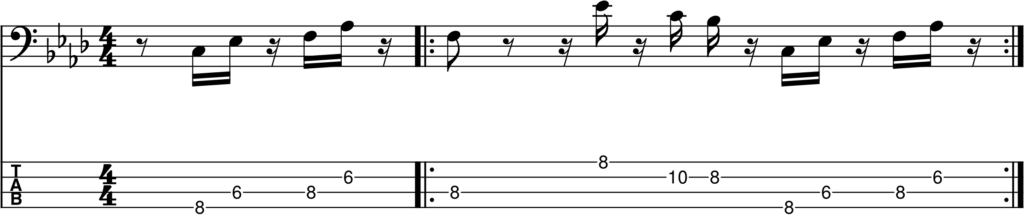
Bassline example from Fela Kuti’s ‘Colonial Mentality’:

Bassline example from Fela Kuti’s ‘Sorrow Tears & Blood’:

Example bassline from Fela Kuti’s ‘Lady’:
